Understanding the Union Budget 2026 in Context
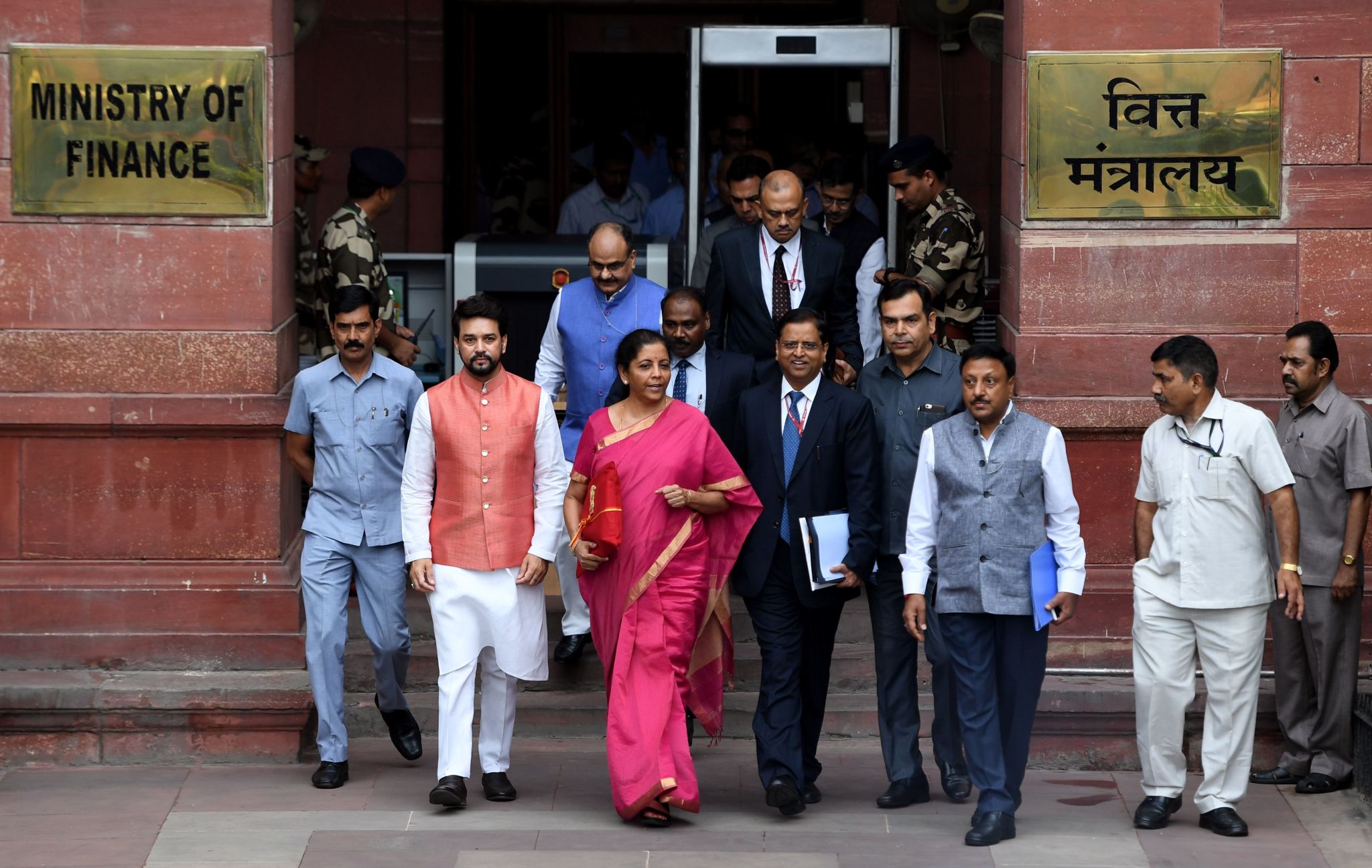
The Union Budget 2026 refers to the Government of India’s annual financial statement for the financial year budget 2026-27, presented to Parliament by the finance minister nirmala sitharaman. It is both a legal document and an economic signal, laying out how public money is expected to be raised and spent.
On February 1, you follow Budget 2026 expectations live, get real-time live updates, and watch Budget 2026 live to understand key announcements and economic signals as they happen.
A common misunderstanding is that the Union Budget is only about tax regime changes. In reality, taxes are just one part. The Budget also reflects government priorities across infrastructure, welfare, fiscal discipline, borrowing, subsidies, and long-term growth direction.
Why the Union Budget 2026 Matters
For residents in India, the Budget shapes:
Public spending direction (infrastructure, social schemes, defence, education)
Tax structure continuity or shifts (even if rates remain unchanged)
Inflation management through fiscal discipline
Signals about India’s macroeconomic stability
Clarity on taxation principles, compliance posture, and capital flows
Confidence cues for long-term engagement with the Indian economy
The Union Budget also acts as a confidence document for global institutions, rating agencies, and investors observing India’s policy consistency.
How the Union Budget 2026 Works
The Budget is not created overnight. It follows a structured cycle:
Pre-budget consultations with states, ministries, and stakeholders
Revenue estimation (tax and non-tax sources)
Expenditure planning (committed + developmental spending)
Fiscal balance calibration (deficit, borrowing, sustainability)
Parliamentary approval, followed by implementation
Only after Parliament’s approval does the Budget become enforceable.
A Generalized Scenario for Clarity
Imagine the Union Budget as a household financial plan—but at a national scale. Income sources are estimated conservatively, essential expenses are locked in first, development goals are funded next, and borrowing is used only to bridge gaps within acceptable limits. Unlike a household, however, the government must balance growth, inflation, equity, and credibility simultaneously.
Risks, Limits, and Trade-offs
Implementation risk: Announcements do not always translate into outcomes
Fiscal constraints: Higher spending can strain deficits if revenues underperform
External factors: Global slowdowns, oil prices, or geopolitical events can disrupt assumptions
The Budget is therefore a directional framework, not a guarantee of results.
Snapshot View: What the Union Budget Represents
| Aspect | What It Represents |
|---|---|
| Legal status | Annual financial authority approved by Parliament |
| Time horizon | One financial year (2026–27) |
| Coverage | Taxes, spending, borrowing, policy intent |
| Impact | Citizens, businesses, NRIs, global observers |
| Nature | Forward-looking but assumption-based |
The Government of India’s official financial plan for the 2026–27 fiscal year. It outlines expected revenues, planned expenditures, and fiscal priorities while signalling economic intent. Beyond taxes, it reflects policy direction, governance discipline, and macroeconomic positioning, making it relevant to citizens, NRIs, and global stakeholders alike.
How the Union Budget 2026 Is Prepared and Approved
The Budget is the outcome of a formal constitutional process, coordinated by the Ministry of Finance and approved by the Indian Parliament.
A frequent misunderstanding is that the Budget is finalised solely by the Finance Minister. In reality, it reflects inputs from multiple ministries, state governments, constitutional requirements, and fiscal responsibility frameworks.
Why This Process Matters
Understanding how the Budget is made helps you interpret it correctly:
Not every demand can be funded due to fiscal limits
Many allocations are continuations, not new announcements
Policy stability is often more significant than headline changes
For NRIs, the structured process signals institutional stability, which is closely watched by global markets and credit rating agencies.
How the Budget-Making Process Works
The preparation broadly follows these stages:
Pre-Budget Consultations
Stakeholders such as industry bodies, economists, and state representatives share perspectives. These consultations are advisory, not binding.Revenue Forecasting
Tax (income tax, GST, customs) and non-tax revenues (dividends, fees) are estimated conservatively to avoid fiscal slippage.Expenditure Prioritisation
- Committed expenses (interest payments, salaries, pensions)
- Developmental spending (infrastructure, welfare, defence)
Committed expenses (interest payments, salaries, pensions)
Developmental spending (infrastructure, welfare, defence)
Fiscal Balancing
The fiscal deficit target is calibrated to balance growth needs with debt sustainability.Parliamentary Procedure
The Budget is presented, debated, voted upon, and then enacted through the Finance Bill and Appropriation Bill.
A Generalised Scenario
Consider a situation where infrastructure spending demand rises sharply, but tax collections grow slower than expected. The Budget process forces trade-offs: either borrowing increases, spending is phased, or priorities are reordered. This explains why some expectations do not appear in the final document.
Risks, Limits, and Trade-offs
Forecast risk: Revenue estimates may differ from actual collections
Political constraints: Coalition dynamics can influence allocation emphasis
Execution lag: Even approved funds may be released gradually
These limits mean the Budget should be read as a policy intent document, not a real-time performance report.
Budget Preparation at a Glance
| Stage | What Happens |
|---|---|
| Consultations | Inputs gathered from stakeholders |
| Revenue estimation | Conservative income projections |
| Spending allocation | Priority-based distribution |
| Parliamentary debate | Scrutiny and approval |
| Legal enactment | Finance & Appropriation Bills |
The Union Budget 2026 is prepared through a structured process involving consultations, revenue forecasting, expenditure planning, and fiscal balancing, led by the Ministry of Finance and approved by Parliament. This process ensures constitutional compliance and fiscal discipline, while also requiring trade-offs between competing priorities due to limited resources and economic uncertainties.
Key Components of the Union Budget 2026 Explained
The Union Budget 2026 expectations is not a single document but a set of interlinked financial statements. A common misunderstanding is that only tax proposals matter. In reality, the most important signals often come from how revenues, expenditures, and deficits are structured, even when tax rates remain unchanged.
Why These Components Matter
Each component answers a different economic question:
How does the government earn money?
Where does it plan to spend?
How much does it borrow to bridge the gap?
For India and NRIs alike, these components help interpret:
Fiscal discipline and debt trajectory
Long-term growth priorities
Inflation and interest-rate sensitivity (indirectly linked with the Reserve Bank of India)
Core Components of the Union Budget
Revenue Receipts
Income from taxes (income tax, GST, customs) and non-tax sources (dividends, fees, interest).Recurring government spending Regular government spending needed for daily functioning, including subsidies, employee wages, pension payments, and interest costs.
Sources of Capital Funds
Money obtained through loans and proceeds from the sale or dilution of government-owned assets.Long-Term Investment Spending (Capex)
Expenditure directed toward creating durable assets such as roads, rail infrastructure, defence equipment, and digital frameworks.Government Budget Gap (Fiscal Deficit)
The difference between total government expenditure and revenue receipts other than borrowings, typically shown as a percentage of GDP.
A Generalized Scenario for Understanding
Assume revenue growth is moderate, but the government wants to accelerate infrastructure creation. The Budget may increase capital expenditure while keeping revenue expenditure controlled, financing the gap through higher but calibrated borrowing. This choice signals a growth-oriented approach, even without headline tax changes.
Risks, Limits, and Trade-offs
High revenue expenditure can limit funds for long-term growth
Excessive borrowing can pressure interest rates over time
Capex-heavy budgets may face execution delays at the ground level
These trade-offs are structural and recur every year, including in the Union Budget 2026.
Components Snapshot Table
| Component | What It Indicates |
|---|---|
| Revenue receipts | Strength of tax and non-tax income |
| Revenue expenditure | Ongoing fiscal commitments |
| Capital expenditure | Long-term growth focus |
| Capital receipts | Borrowing and asset monetization |
| Fiscal deficit | Overall fiscal discipline |
How the Union Budget 2026 Can Affect Different Sections of the Economy
The Union Budget 2026 influences the economy through allocation choices, not just announcements. A common misunderstanding is that its impact is immediate and uniform. In practice, effects vary by sector, income group, and time horizon, and many outcomes depend on execution rather than intent.
Why These Impacts Matter
Understanding sector-wise impact helps you read the Budget beyond headlines:
It clarifies who is prioritized in public spending
It explains indirect effects on prices, employment, and growth
It separates short-term relief from long-term capacity building
For NRIs, these signals matter mainly as indicators of India’s economic direction and policy continuity, rather than day-to-day financial outcomes.
Key Areas Commonly Affected
Households and Individuals
Impacts arise through tax structures, subsidies, and public services. Even without tax rate changes, adjustments in deductions, compliance rules, or welfare targeting can alter disposable income dynamics.Businesses and Industry
Budget provisions may affect demand, compliance costs, and infrastructure access. Indirect tax stability—often coordinated through bodies like the Goods and Services Tax Council—can be as important as direct incentives.Infrastructure and Capital Formation
Higher capital expenditure supports long-term productivity but delivers benefits gradually. Execution speed determines real impact.Social and Developmental Sectors
Spending on health, education, and welfare improves human capital but requires sustained funding over multiple years to show measurable outcomes.
A Generalized Scenario
Suppose the Budget prioritizes infrastructure and limits revenue expenditure growth. Construction-related sectors may benefit earlier through government contracts, while households experience indirect effects later via employment and improved logistics. This time lag often leads to mismatched expectations.
Risks, Limits, and Trade-offs
Uneven distribution: Benefits may concentrate in certain regions or sectors
Time lag: Economic impact can take years to materialize
Fiscal pressure: Expanding support without matching revenues can strain future budgets
These constraints mean Budget impact should be assessed over a cycle, not a single year.
Sectoral Impact Overview
| Area | Typical Budget Influence |
|---|---|
| Individuals | Taxes, subsidies, public services |
| Businesses | Demand, compliance environment |
| Infrastructure | Long-term growth capacity |
| Social sectors | Human capital development |
| Overall economy | Growth–deficit balance |
Common Expectations and Misconceptions Around the Union Budget 2026
Public discussion around the Union Budget 2026 often mixes expectations, assumptions, and misconceptions. A common misunderstanding is that every Budget must deliver broad-based relief or dramatic changes. In reality, most Union Budgets focus on continuity with calibrated adjustments, especially when macroeconomic stability is a priority.
Why Understanding Expectations Matters
Misplaced expectations can distort how the Budget is perceived:
A “no major change” Budget is often seen as a failure, even when it signals stability
Incremental reforms may be overlooked despite long-term significance
Media narratives can amplify selective aspects while ignoring structural signals
For NRIs, separating expectations from reality helps in interpreting India’s policy direction without being influenced by domestic sentiment cycles.
Frequently Seen Expectations
Across-the-board tax relief
Many expect tax slabs or rates to change annually. Historically, such changes are infrequent and often phased.Immediate economic impact
Budgets are expected to boost growth instantly, despite most measures working through multi-year implementation.Large new schemes every year
In practice, governments often consolidate or expand existing schemes rather than introduce entirely new ones.Uniform benefit to all groups
Budget measures are targeted, not universal, leading to uneven short-term outcomes.
A Generalized Scenario
Assume the Budget maintains existing tax structures but increases capital expenditure and reallocates welfare spending. While there may be limited immediate relief for individuals, the intent could be to strengthen long-term growth and fiscal credibility. Such Budgets are often misunderstood as “uneventful” despite their structural importance.
Risks, Limits, and Trade-offs
Expectation gap: Public anticipation may exceed fiscal capacity
Communication risk: Nuanced measures may be overshadowed by headline demands
Policy fatigue: Repetition of priorities can be mistaken for inaction
These trade-offs are inherent in annual budgeting, particularly in large, diverse economies like India.
Expectations vs Reality Snapshot
| Area | Common Expectation | Typical Reality |
|---|---|---|
| Taxes | Annual rate cuts | Infrequent, phased changes |
| Impact | Immediate results | Gradual, long-term effects |
| Schemes | Many new launches | Consolidation of existing ones |
| Coverage | Benefits for all | Targeted beneficiaries |
How to Read and Interpret the Union Budget 2026 Responsibly
The Union Budget 2026 is often read through headlines or selective tax changes, which can lead to incomplete conclusions. A common misunderstanding is that the Budget speech alone captures everything important. In reality, the supporting documents provide deeper insight than the speech itself.
Why Reading the Budget Properly Matters
A structured reading approach helps you:
Distinguish policy intent from implementation detail
Avoid overreacting to short-term narratives
Understand fiscal direction beyond personal impact
For NRIs, this approach is especially useful because relevance is usually macro-level, not transactional.
How the Union Budget Should Be Read
Start with “Budget at a Glance”
This summary outlines major numbers—revenues, expenditures, and deficits—without detail overload.Review Expenditure Statements
These show which sectors are being prioritized and whether spending is capital- or revenue-heavy.Examine the Fiscal Deficit Path
The deficit trajectory signals the government’s approach to growth versus stability, often in coordination with institutions like the Reserve Bank of India.Read the Finance Bill Separately
Tax law changes are contained here, not in the speech. Many changes are technical rather than structural.Separate Announcements from Allocations
Allocation size matters more than the announcement itself.
A Generalized Scenario
Two Budgets announce infrastructure focus. One increases capital allocation meaningfully; the other keeps allocations flat while highlighting intent. A surface-level reading treats both equally, but a deeper reading shows which one is more likely to influence long-term growth.
Risks, Limits, and Trade-offs
Information overload: Detailed documents can be misread without context
Headline bias: Media focus may skew perception
Assumption risk: Numbers are projections, not guarantees
Responsible interpretation requires patience and context, not speed.
Reading the Budget: What to Focus On
| Document / Area | What It Tells You |
|---|---|
| Budget at a Glance | Overall fiscal picture |
| Expenditure statements | Sectoral priorities |
| Finance Bill | Legal tax changes |
| Deficit numbers | Fiscal discipline |
| Medium-term outlook | Policy continuity |
Frequently Asked Questions (FAQs) on the Union Budget 2026
Is the Union Budget 2026 only about taxes?
No. The Union Budget 2026 covers government revenues, expenditures, borrowing, and policy priorities for the entire economy, not just taxes. Tax proposals are only one section within the Finance Bill. Much of the Budget’s importance lies in spending allocation, capital expenditure, and fiscal discipline. This understanding is the same for residents and NRIs, as the structure does not vary by audience.
Does the Union Budget 2026 guarantee economic growth?
No. The Budget outlines intent and allocation, not guaranteed outcomes. Economic growth depends on execution, global conditions, and private sector response. Budget numbers are projections based on assumptions that may change. This limitation applies equally in the Indian domestic context and for NRIs interpreting India’s macroeconomic outlook.
Are all Budget announcements implemented immediately?
No. Many announcements are phased over months or years and require further rules, notifications, or administrative readiness. Some allocations may also remain underutilized. This delay between announcement and impact is a structural feature of public finance and does not differ for India or NRI-related matters.
How relevant is the Union Budget 2026 for NRIs?
The Budget is relevant mainly at a macro and regulatory level for NRIs. It signals policy stability, fiscal discipline, and the government’s stance on taxation and compliance. However, it does not automatically change individual NRI tax outcomes unless specific provisions are amended in law.
Can the Union Budget change after it is presented?
Yes, but within limits. During parliamentary debate, changes can be made before final approval, and later amendments may occur through subsequent legislation. However, the broad fiscal framework usually remains intact. This legislative process is uniform and does not vary by taxpayer category.
Final Perspective: What the Union Budget 2026 Ultimately Represents
The Union Budget 2026 should be understood as a direction-setting document, not a scorecard or a promise. It balances growth objectives, fiscal limits, and political realities within a single financial year framework. Reading it patiently, with attention to structure rather than headlines, allows you to assess its significance without overestimating short-term impact.